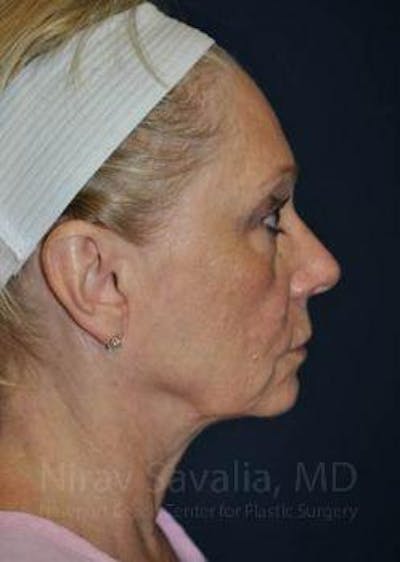
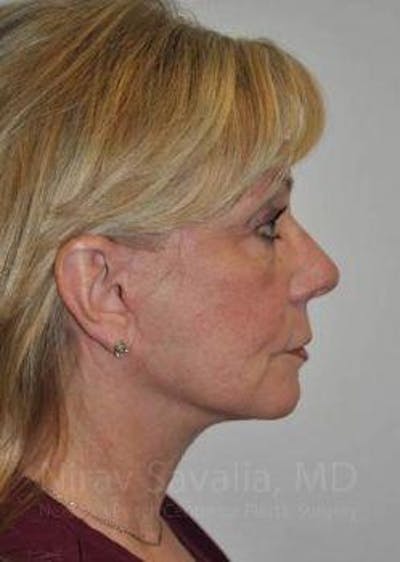
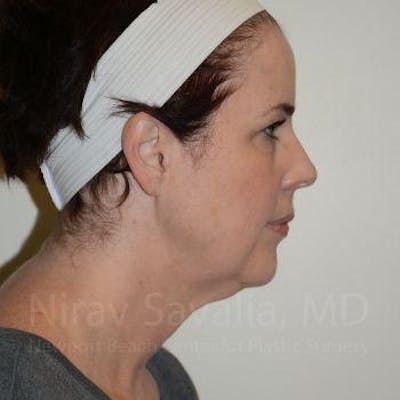
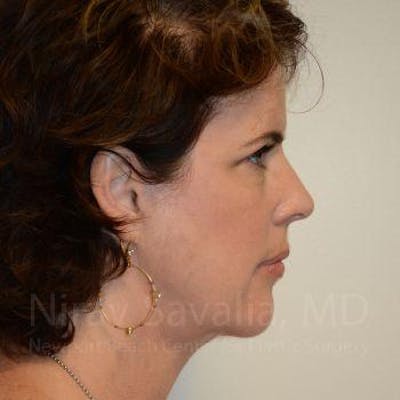
Dr. Savalia emphasizes a comprehensive approach to facial aging. This means he considers the basic facial components that show signs of aging and completely addresses each of them. By evaluating the temple, forehead and eyebrows, eyes, cheeks, laugh lines, jawline, and neck, he can help you identify the various subtle signs of aging.
Sometimes, simply repositioning a brow by a few millimeters can make all the difference. Restoring volume to the cheeks with fat injections may be more important than pulling the skin taut over a cheekbone. Dr. Savalia’s goal is not to “turn back the clock” to your twenties, or pull your skin as tight as possible to remove every wrinkle on your face—his goal is to unmask your natural, attractive features by restoring tissues to their natural position and replacing lost volume in the face. This may include other procedures, such as a brow lift, eyelid surgery, or nonsurgical med spa treatments such as BOTOX® Cosmetic.
We all have a central facial layer made of a network of muscle and connective tissue below the skin, known as the superficial muscular aponeurotic system (SMAS). The SMAS layer provides a supportive framework for the skin of the lower face and when the SMAS ages, the skin sags with it. Over time, as this layer stretches out in concurrence with loss of facial fat, you begin to see a sunken or flattened appearance under the eyes (“midface”), a sagging jawline with jowls, and obliteration of the neck angle, common in facelift candidates.
The problem really is more than skin deep. Simply pulling the skin tight without correcting the supportive SMAS layer will inevitably lead to poor results. Surgical correction of the SMAS layer is a critical component of any lasting facelift procedure, as is fat transfer (aka fat injections) to correct facial deflation.