What Is a Deep Plane Facelift?
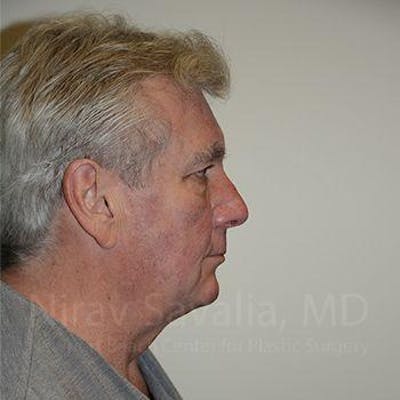
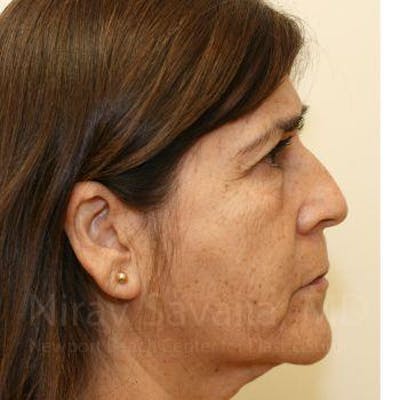
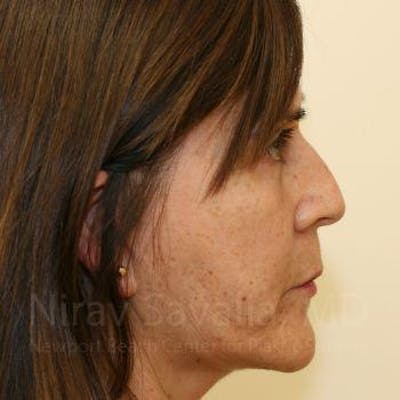
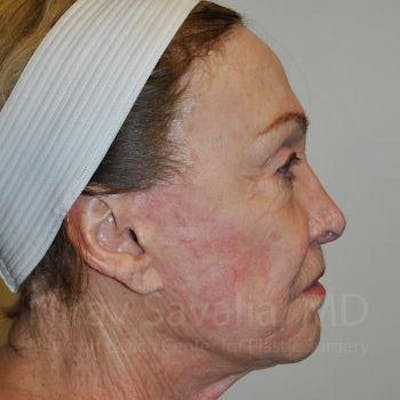
The short answer? It’s an increasingly popular facelift technique that achieves more profound and long-lasting results by accessing and repositioning deeper structures than a traditional facelift typically does.
Facial Anatomy
To truly understand a deep plane facelift, it is helpful to compare it to other popular methods and to consider the anatomy of the face. The most pertinent facial structures include the skin, muscle, and fat, as well as retaining ligaments, and a crucial layer of connective tissue called the superficial musculoaponeurotic system (SMAS).
SMAS Techniques
Over the last few decades, the standard facelift (rhytidectomy) has primarily focused on manipulating the SMAS layer. SMAS techniques include plication (lifting by folding and stitching the SMAS), imbrication (overlapping the SMAS), and excision (removing excess SMAS tissue). SMAS techniques can yield good results for patients seeking moderate lifting.
The Deep Plane Facelift vs. SMAS Techniques
The deep plane facelift is distinct in two aspects:
- It operates in sub-SMAS planes (tissue layers), accessing structures deeper than the SMAS layer.
- It involves ligamentous release, which consists of cutting the facial retaining ligaments that anchor the skin to the muscles.
Cutting the facial ligaments fully releases the SMAS layer, allowing for more precise repositioning of all facial structures. It is also the only way to fully eradicate nasolabial folds, whereas SMAS techniques can sometimes emphasize deep facial lines or fail to address them entirely.
Dr. Savalia’s technique also involves lifting the orbicularis oculi muscle, restoring it to a more youthful position and better elevating the midface—creating a more youthful cheek contour and repositioning malar fat pads to address lost volume, often without the need for fat grafting.
The deeper and more significant tissue manipulation made possible by the deep plane facelift technique results in more profound, yet subtle and natural-looking rejuvenation.